The Frequency Ledger | Issue No. 001 | August 2026
STILL SLIM
Nearly two decades after their first interview, Aiko Voss reconnects with Derick Jones to talk about musical evolution, impossible combinations, Fractured Melancholy, hip-hop as home base, the party years, and the legacy he hopes is still ahead.
This conversation has been lightly edited for clarity and flow while preserving Jones’ natural voice. Certain personal details discussed off the record have intentionally been omitted.
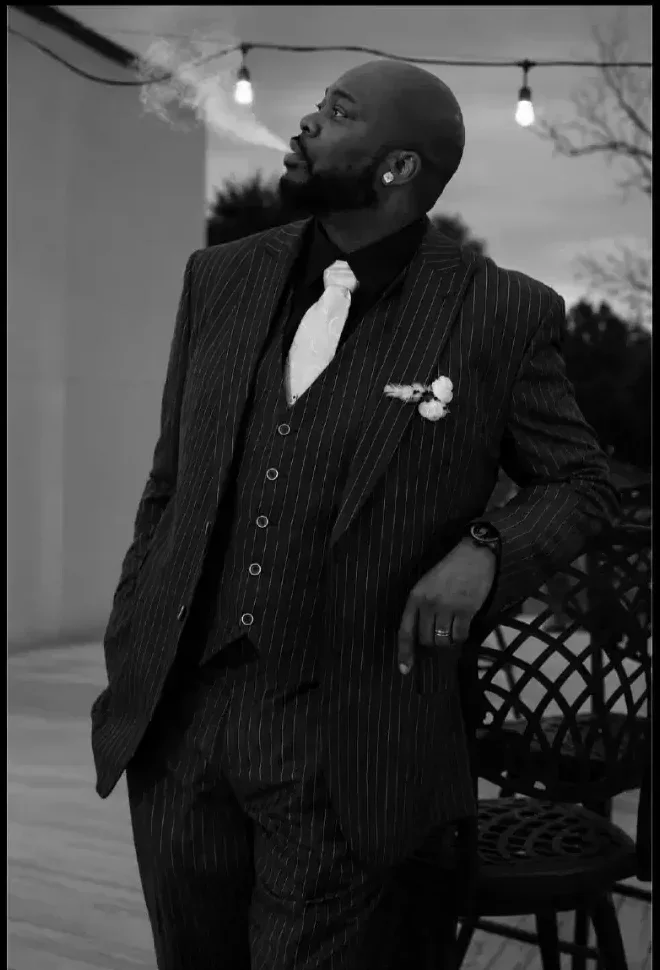
I first met Derick Jones when California and the rave scene were still very much part of his world. He was an aspiring DJ. I was just getting started at a small independent city magazine that has long since disappeared, and I had the kind of confidence people tend to have before life teaches them better. Somewhere along the way I told him that when the opportunity came, I wanted one of his first real interviews.
Jones laughed. He also remembered.
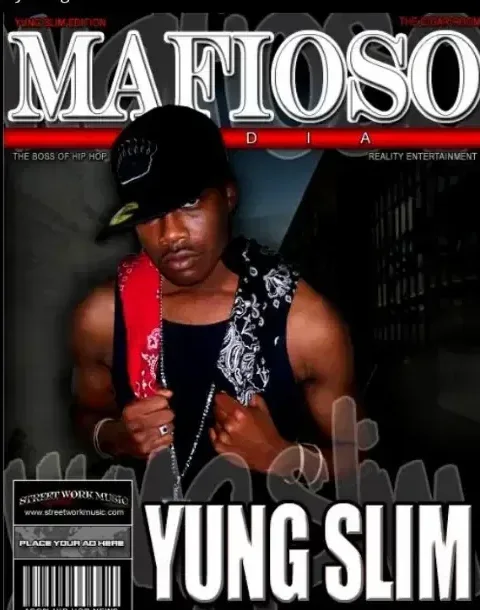
We did not actually sit down for that formal interview until 2009. By then he had left California behind and landed his first Las Vegas nightclub opportunity at The Bank inside Bellagio. He was Yung Slim then: young, ambitious, surrounded by people, still carrying the energy of the rave scene but already stretching beyond it. DJ Scumbag Slim did not exist yet, at least not publicly.
Vegas was brief. Jones eventually went back South to Georgia. Careers changed. Responsibilities multiplied. People moved. There was no dramatic falling-out between us. Life simply did what life does, and we lost touch.
Nearly two decades later, I stumbled onto an artist page for DJ Scumbag Slim. The face looked familiar. The music did not. Mixtapes, mashups, edits, original records, alternate identities, years of experimentation. Apparently Derick Jones had been busy while I was not watching.
One page became another. An artist profile led to a website. A website led to more music. I was in Novi Sad, Serbia, following the dance culture there when I finally reached out. The first thing Jones wanted to know was whether I was seriously calling him from Serbia.
When we finally sat down again, another difference was obvious. In 2009, interviewing Jones felt like somebody had scheduled journalism in the middle of a traveling party. This time he came alone. No entourage. No mobile celebration. Just Derick, older, calmer, and still unmistakably Slim.
The first interview was about momentum. This one is about what happened after the momentum had somewhere to go: how the music changed, why hip-hop remained the foundation, what happened to the party, why an unfinished project called Fractured Melancholy has taken more than two years to release, and what Jones hopes is still waiting for him twenty years from now.
The Frequency Ledger | Issue No. 001 | August 2026
Voss: I think I was equally surprised when I found you. I’m online one night, stumble across DJ Scumbag Slim, recognize you, and suddenly there’s an entire catalog I’ve never heard. What happened?
Jones: Oh man. I wouldn’t say it happened suddenly. I grew, I matured, and when I left the West Coast and went back South, my sound expanded with me. The scene was changing, music was changing, and what I was doing had to evolve too. Not just to keep up with the times, but to fit where I was. You don’t walk into a region where country music dominates and just start blasting dubstep like nothing happened. You figure out how to make those two worlds coexist. You find the common ground, blend the influences, and make it feel natural instead of forced. [Laughs.] You don’t walk into a room full of Swifties and start blasting Ye without a damn good reason, right? That evolution became a big part of my sound.
Voss: And somewhere in there, you were apparently making mixtapes like somebody was getting ready to outlaw them.
Jones: [Laughs.] Pretty much. I was pumping out mixtapes left and right. I was constantly working on something. Finish one, start thinking about the next one. Hear a record, think about what I could do with it. Hear two songs and wonder whether they had any business being in the same room together. A lot of the sound people associate with me now came from those years.
Voss: So the mixtapes were almost your laboratory.
Jones: Yeah, absolutely. That was where I got to try things. Sometimes it worked. Sometimes it probably had no business working. And sometimes those were the ones I liked the most.
Voss: That helps explain something like Born to Drive Right. I found that one while I was going through the catalog, and it’s another one of those records where you stop and think, Who decided this was a good idea?
Jones: [Laughs.] Exactly.
Voss: And somehow that seems to be where you’re happiest. You hear something that shouldn’t necessarily fit and your first response is, Okay, but what if it did?
Jones: Yeah. That’s really it.
Voss: Which is a mildly concerning way to approach music.
Jones: [Laughs.] It works.
Voss: Was there a point where that stopped feeling experimental and started feeling like your signature?
Jones: Yeah. There was a time when I would deliberately go looking for songs that had no business being together. One of the early ones was the Tupac and Frank Sinatra mix, Thugs Get Lonely in the Night. That was one of those moments where I realized, okay, this doesn’t have to make sense on paper for it to make sense in my head. At this point, I don’t really sit down thinking, What’s the weirdest combination I can come up with? Now it’s more like, Hey, I like this song. What can I do with it?
The Frequency Ledger | Issue No. 001 | August 2026
Voss: Did that instinct change when you moved between different places and scenes?
Jones: Absolutely. When I left Vegas and went back to Georgia, I was still concentrated on making music for the clubs and to dance to. One of my childhood friends, James Hardy, pulled me aside one day and was basically like, Man, look. The music you’re making is good music. But nobody here is looking for that kind of music. He was absolutely right. Once I started shifting lanes, more doors started opening up. That’s when I started leaning harder into the hip-hop edits and figuring out how to take what I already knew from dance music and make it work in a completely different environment.
Voss: So Georgia didn’t kill the dance side of you. It forced you to translate it.
Jones: Exactly. I wasn’t abandoning anything. It was me taking a lane that I felt comfortable in and knew, and adding my twist to it. You want dance music? You want hip-hop music? I’m gonna give you both so you don’t have to decide where you’re gonna listen to the music at.
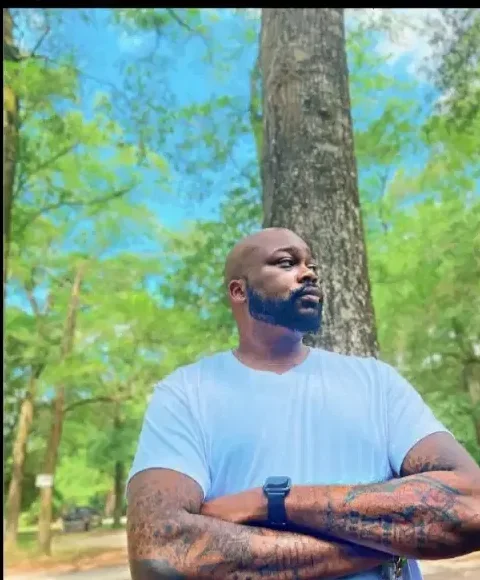
Voss: Something became pretty obvious while I was going through your music. You’ll pull from dance, rock, pop, country, R&B, whatever catches your ear. But is there one genre you still consider the foundation of what you do?
Jones: Hip-hop. Absolutely. No matter what kind of record I’m making, hip-hop is the foundation. That’s where I draw most of my inspiration from. In fact, every mix I’ve done that features a rapper was built around the rapper. That’s usually
the starting point for me. Everything else gets shaped around that voice, that cadence, that energy. The finished record might pull from rock, pop, country, dance, whatever. But the spine of it is still hip-hop.
Voss: You’ve been doing this a long time now. What has you excited about hip-hop at this point?
Jones: Oh man, look at all these OGs coming back. You talk about Rakim. AZ. Masta Killa. Daz. The Game. Kurupt. Busta Rhymes. T.I. There are so many artists making music right now that, for all intents and purposes, I honestly thought were out of the rap game. And hip-hop seems to be the only genre where artists age out. Nobody really looks at a rock artist in his fifties or sixties and says, Why are you still doing this? Nobody looks at a country singer and says, You’ve reached a certain age. Time to hang it up. But hip-hop has always had this weird thing where, at some point, people start acting like you’re supposed to step aside. So seeing these guys come back around and not only making records again, but making genuine bangers? I love it. This is an exciting time to be a hip-hop fan, for sure.
Voss: Does seeing those artists come back and still make great records change how you think about your own longevity?
Jones: Yeah, absolutely. I think for a long time hip-hop made people feel like there was some kind of expiration date attached to the artist. I don’t buy into that. If you still have something to say, or in my case, something you want people to hear, why stop? I know this doesn’t go forever. But I’m not done yet. There’s a difference.
Voss: You’ve also never really charged people for the mixes.
Jones: I mean, I’ve never been into making music for the money. As far as my mixes go, I’m not in it for the money. Now, when we start talking about DJing and producing, that’s another lane entirely. But the mixes? Man, no. I do this because I love it. And if I’m making great music that people are loving, why should I charge them?
Voss: And now you’re trying to put the scattered catalog in one place.
Jones: Yeah. I’m in the process of consolidating my music library from across the Internet onto one free streaming platform. Over the years, the music ended up in a lot of different places. Different sites, different platforms, different eras of my career. I just want to make it easier for people to find everything in one place.
Voss: And still free.
Jones: Still free.
Voss: One of the names I kept running into while going through the catalog was Silky Slim. And the more I thought about it, the more it felt like part of a long hip-hop tradition of artists splitting themselves into competing temperatures. T.I. had T.I. versus T.I.P. Nelly separated Sweat and Suit. Jay-Z built The Blueprint 2 around The Gift and The Curse. OutKast took the split even further with Speakerboxxx/The Love
The Frequency Ledger | Issue No. 001 | August 2026
Below. And your favorite artist has spent most of his career wrestling with the controversial Slim Shady figure beside Marshall Mathers. Was that kind of duality what you were reaching for?
Jones: Silky Slim was more of an idea. I’ve got to credit the whole T.I. versus T.I.P. concept with some of it. The actual album was going to be called Scumbag Slim vs. Silky Slim: The Hustler vs. The Romantic. Nelly had played with something similar too. I liked the idea of being able to put two different sides of the same artist on one project without forcing either one to become the whole identity.
Voss: The Hustler versus The Romantic. That title says almost everything.
Jones: Exactly. Not everything has to be for the streets. Not everything has to be for the clubs. Let’s have some stuff we can ride out to during a sunset or on a rainy day. Or, hey, even for baby-making sessions.
Voss: There he is. I was wondering how long we were going to remain respectable.
Jones: [Laughs.]
Voss: I was starting to get worried.
Jones: [Laughs.]
Voss: What did that softer side allow you to do?
Jones: I had an option to be more emotional with the music.
Voss: Which brings us to what you’re working on now.
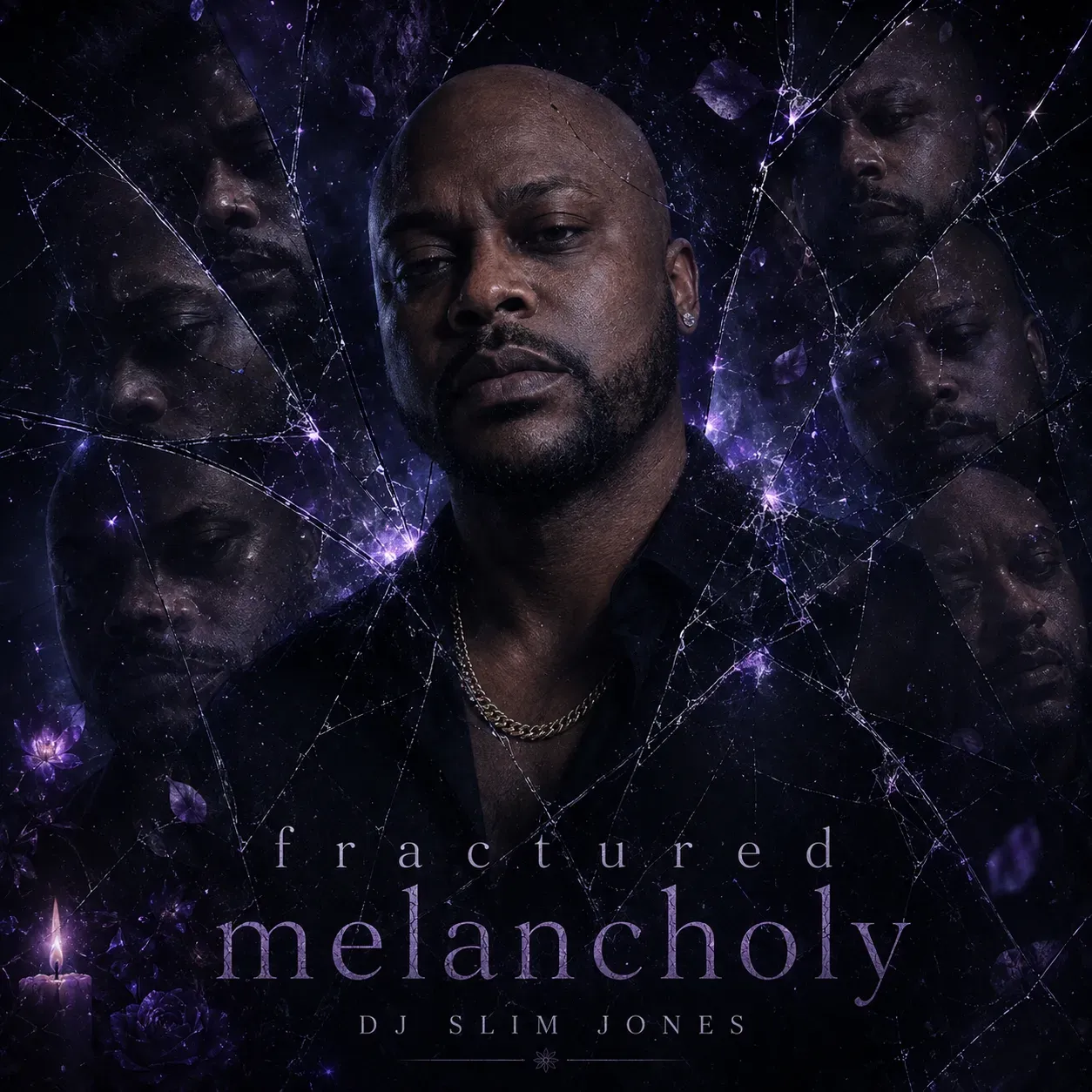
Jones: I’m working on a project right now called Fractured Melancholy.
Voss: Tell me about that one.
Jones: Honestly, I think it may end up being the best work of art I’ve created thus far. It’s probably one of the most emotionally driven projects I’ve ever worked on.
Voss: What’s driving it?
Jones: Raw emotion. Heartache. Pain. Sadness. Disbelief. All of it is going into the project. I don’t think people need to know every detail. But they can know that the emotion behind it is real.
Voss: You allowed me to hear Garbage Bag and Packing Up My Bones. The first feels like being swallowed by a thought. The second feels like walking away carrying only what is left of you. They don’t sound like the same emotion, but they feel like the same wound. Is that fair?
Jones: To fully understand this album, you have to understand that I was in a sunken place, if you will. These songs were made while I was in a very vulnerable state. And when I’m operating on pure emotion, it comes out somehow. It might show up in the music I’m listening to, the movies I’m watching, something I’m writing, or the music I’m making. Whatever form it takes, the emotion always finds a way out of me.
Voss: You’ve been living with this project for more than two years. What has kept you with it for that long?
Jones: In all honesty, I could have put this out in May of 2024. I’ve had issues with this release for two reasons. One, this is my most personal project to date. And two, the vulnerability is still there. I’ve gone back, made tweaks, made edits, changed things around. But in the end, I kept scrapping those changes and coming back to the originals. At some point I had to realize I wasn’t going to improve it by continuing to mess with it. If I kept tweaking it, this album would still be pending release ten years from now.
Voss: What’s up next after you have completed this project?
Jones: I’ve been thinking about doing something with vinyl.
Voss: Vinyl?
Jones: Yeah. We aren’t there yet, but I think this is gonna be a really fun project. I’m thinking maybe 20 to 30 copies, specifically for the people in my life who have been part of this journey from day one. Whether you have a record player or not, you have a piece of me with you. If you do, great. You can listen to some of the music and understand a little more of where my heart was. If you don’t, it’s still a piece of artwork you can put on your wall and remember that you were there from day one.
Voss: So those aren’t really twenty or thirty customers.
Jones: No.
Voss: They’re twenty or thirty people you’re saying thank you to.
Jones: Exactly.
The Frequency Ledger | Issue No. 001 | August 2026
Voss: All right. We’ve been serious for a minute. Somebody finds your page tonight and knows absolutely nothing about Derick Jones, DJ Scumbag Slim, any of it. What are you telling them to expect?
Jones: I typically tell people to get ready to hear some of the best mixes that they never knew they needed. Or, to simply put it: get ready to have an eargasm.
Voss: And there goes whatever respectable reputation this publication had left.
Jones: [Laughs.]
Voss: So what else are you working on right now?
Jones: Quite a bit, actually. I’ve got this collective of individuals I’ve met over the years. Everybody brings something different. Different tastes, different regions, different backgrounds. We’re working on getting a digital radio station together. The idea is to give all of us a place where we can introduce people to the music we like. There’s more to it than that, but yeah, at the heart of it, we want to share music. I’ve also got a cookbook in the works. And I’m looking at getting involved with film.
Voss: Hold on. Radio. A cookbook. And film?
Jones: [Laughs.] Yeah.
Voss: You disappear for seventeen years and come back with side quests.
Jones: [Laughs.]
Voss: And you slipped getting involved with film in there like I wasn’t going to notice it. How much can you actually tell me?
Jones: Not much right now. There’s a pretty big project I’m looking at, and if everything works out the way I’m hoping, I think it could be really exciting. But right now, I’m just waiting to see how everything develops.
Voss: So no names.
Jones: Nope.
Voss: No details.
Jones: Nope.
Voss: You realize this is incredibly annoying for someone whose job is asking questions.
Jones: [Laughs.] I know.
Voss: You’re enjoying this.
Jones: Maybe a little.
Voss: You know what else is throwing me off? You’re alone. Last time we actually sat down, you came in with what felt like an entire entourage. It was basically a mobile party. Today? Just you. What happened?
Jones: You’ve gotta understand, the last time we actually sat down and saw each other, I was a kid. My lifestyle at the time WAS the party. And looking back, half of those dudes? I didn’t even really know them. They were just hang-arounds. Once my situation changed, I noticed my circle getting smaller and smaller. I’ve got a few cats I still rock with, but these days I try to keep it mostly solo. Less drama that way. I’m at a point in my life where I can’t be getting caught up in dumb stuff or letting somebody else’s decisions become my problem. That kid you met years ago is still in here. I’m still a hothead. I’m not gonna pretend that part of me completely disappeared.

Voss: So this isn’t you becoming antisocial. It’s you becoming selective.
Jones: Exactly.
Voss: Do you ever miss the chaos?
Jones: You know, there are times I do miss the sheer uncertainty of it all. Not knowing what city we’d be in that night or what party we were headed to. Hotel living. Sleeping on strangers’ couches after shows. Looking back, it was definitely exciting. Dangerous, but exciting. But I can’t live like that anymore. It was fun, but there was always chaos. Always drama. You know, that kind of lifestyle is fun when you’re early on into adulthood. But now? Now I’m at a place in my life where the most drama and chaos I want is trying to figure out whether I can put Jon Bon Jovi, Elvis, Sabrina Carpenter and Lil Wayne all on the same track together and still make it a banger.
The Frequency Ledger | Issue No. 001 | August 2026
Voss: Somehow, with you, that sounds less like a joke and more like a warning.
Jones: [Laughs.]
Voss: Your style feels more refined than I remember. Is that intentional?
Jones: Absolutely. That came with getting older. At one point it was more about putting on an image. Now it’s about knowing what works for me. Just because something is fashionable at the moment doesn’t mean it’s going to last. That goes for clothing, jewelry, the music... everything in life. I think once you get comfortable with who you are, you stop needing the extras to explain it for you.
Voss: So it’s less about keeping up and more about knowing yourself.
Jones: Exactly.
Jones: Let me ask you something before we finish.
Voss: Uh-oh.
Jones: One thing I’ve always remembered about you is that you wanted to travel. When you called me and told me you were with a brand-new publication and wanted me to be featured, I was ecstatic. But I also remember very distinctly asking you, Are you seriously calling me from Serbia? [Laughs.] You went on to explain that you were in Novi Sad following the dance culture there. So now I’ve got a serious question for you. Out of everywhere you’ve traveled, what’s been your favorite place so far? And where have you found the best music scene?
Voss: That is actually two questions.
Jones: [Laughs.] You’ve been cheating all afternoon. Answer them.
Voss: Fair. Favorite place and best music scene aren’t necessarily the same answer. Serbia is absolutely up there, though. Novi Sad caught me off guard. There’s something about being somewhere unfamiliar and realizing that everybody understands the same thing once the music starts. That’s probably what traveling taught me more than anything. Cultures can be completely different, languages can be different, people can disagree about damn near everything, and then somebody puts the right record on and suddenly nobody needs a translator. As far as the best music scene? I’m still not sure I’ve found it. And I kind of hope I never decide.
Jones: That is such a journalist answer.
Voss: [Laughs.] You asked a journalist. All right. Are you finished interviewing me?
Jones: Yeah, I guess so.
Voss: Good. Because I get the last question. And since apparently it takes us twenty years to schedule these things, I should probably make this one count. If we sit down again twenty years from now, what do you hope we’re talking about?
Jones: Oh, wow. Twenty years from now? I hope we’re talking about my legacy.
Voss: That’s a hell of an answer.
Jones: [Laughs.] Yeah.
A lot has changed since the last time Derick Jones and I sat down together. The aspiring DJ became a man pumping out mixtapes fast enough to build a catalog I had to rediscover nearly two decades later. The experiments became instinct. The dance DJ learned how much hip-hop, country, rock, pop and everything in between could coexist inside his sound if he could find the connection.
Slim discovered Silky. The man who once traveled with a party learned how to walk into a room alone. And the artist accustomed to making records designed to move rooms is now finishing one built largely from what happened when he finally sat still with himself.
Maybe that is the story of the years between. Not that Slim became somebody else. That he grew comfortable enough to stop trying to prove who he was.
He still hears possibilities where other people hear incompatibility. Hip-hop is still home. He still wants people to hear the music. Still free. Still sharing. Still Slim.
Hopefully, this time, it will not take us until 2046 to talk again.
— Aiko Voss